




Mexican Recipes
Easy Chile Relleno Casserole: All the Flavor, Less Fuss
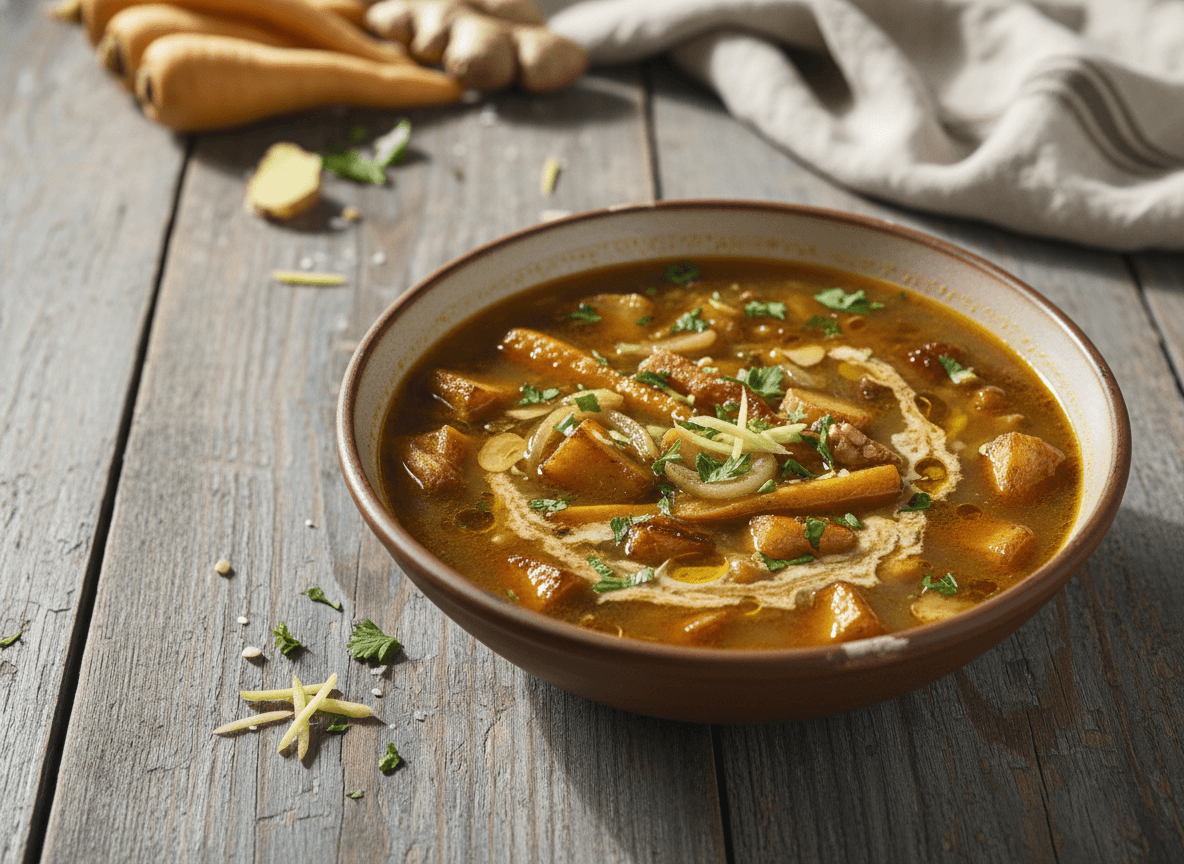
A deeply comforting and nourishing soup, perfect for chilly days. This Miso Ginger Winter Root Vegetable Soup blends the sweetness of parsnips and carrots with the warmth of ginger, all brought together by the savory depth of miso.
*Nutrition per serving
A deeply comforting and nourishing soup, perfect for chilly days. This Miso Ginger Winter Root Vegetable Soup blends the sweetness of parsnips and carrots with the warmth of ginger, all brought together by the savory depth of miso.
*Nutrition per serving
| 30ml (2 tbsp) | Olive oil |
| 1 medium (about 150g / 5.3 oz) | Yellow onion |
| 3 cloves (about 15g / 0.5 oz) | Garlic |
| 5cm (2 inches) | Fresh ginger |
| 500g (1.1 lb) | Parsnips |
| 500g (1.1 lb) | Carrots |
| 1.5 liters (6.3 cups) | Vegetable broth |
| 500ml (2 cups) | Water |
| 75g (1/3 cup) | White miso paste |
| 15ml (1 tbsp) | Soy sauce or tamari |
| 5ml (1 tsp) | Sesame oil |
| 2 stalks | Scallions |
| 5g (1 tsp) | Toasted sesame seeds |
Heat the olive oil in a large pot or Dutch oven over medium heat. Add the finely chopped yellow onion and sauté for 5-7 minutes, stirring occasionally, until softened and translucent. Be careful not to brown the onions too much, as this can affect the soup's delicate flavor.
Add the minced garlic and grated fresh ginger to the pot. Cook for another 1-2 minutes, stirring constantly, until fragrant. This step blooms the aromatics, releasing their full flavor and aroma into the oil.
Ensure the heat is not too high to prevent the garlic from burning, which can make it bitter.
Add the prepared parsnips and carrots to the pot. Stir them around to coat them lightly with the oil and aromatics. Cook for about 5 minutes, stirring occasionally, to slightly soften the vegetables.
Pour in the vegetable broth and water. Bring the mixture to a boil over medium-high heat. Once boiling, reduce the heat to low, cover the pot, and let it simmer for 20-25 minutes, or until the root vegetables are tender when pierced with a fork.
While the vegetables are simmering, prepare the miso mixture. In a small bowl, whisk together the white miso paste with about 250ml (1 cup) of the hot broth from the pot. This is crucial to prevent the miso from clumping and to ensure it dissolves smoothly into the soup. Using hot liquid helps to temper the miso and preserve its beneficial probiotics.
Never boil miso paste, as high heat can diminish its flavor and nutritional benefits. It should be added at the end of the cooking process.
Once the vegetables are tender, stir the miso mixture into the soup. Add the soy sauce or tamari for an extra layer of umami. Stir well to combine everything. Gently heat the soup for another 2-3 minutes over low heat, ensuring it does not boil.
Taste the soup and adjust seasoning if needed. You can add more miso paste for a saltier, more intense flavor, or a splash more soy sauce. Stir in the toasted sesame oil for a final aromatic touch.
Miso paste can vary in saltiness, so tasting and adjusting is key. Start with the recommended amount and add more gradually if desired.
Ladle the hot soup into bowls. Garnish generously with thinly sliced scallions and toasted sesame seeds, if using. Serve immediately and enjoy the warming comfort.
Mexican Recipes
Easy Chile Relleno Casserole: All the Flavor, Less Fuss

Mexican Recipes
Hearty Mexican-Inspired Tamale Pie with Cornbread Topping

Meat & Poultry
A Scotsman’s Shepherd’s Pie with Stout Gravy

Soups, Stews & Chili
Hearty Smoky Paprika Lentil Stew

Meat & Poultry
Cider Braised Chicken with Winter Herbs

Bread & Baked Goods
Savory Herb Oat Biscuits for Soups and Stews